
Artistry on Ice: What Dancers Can Learn from Figure Skating
Episode 58 Recap — No Starving Artist Podcast
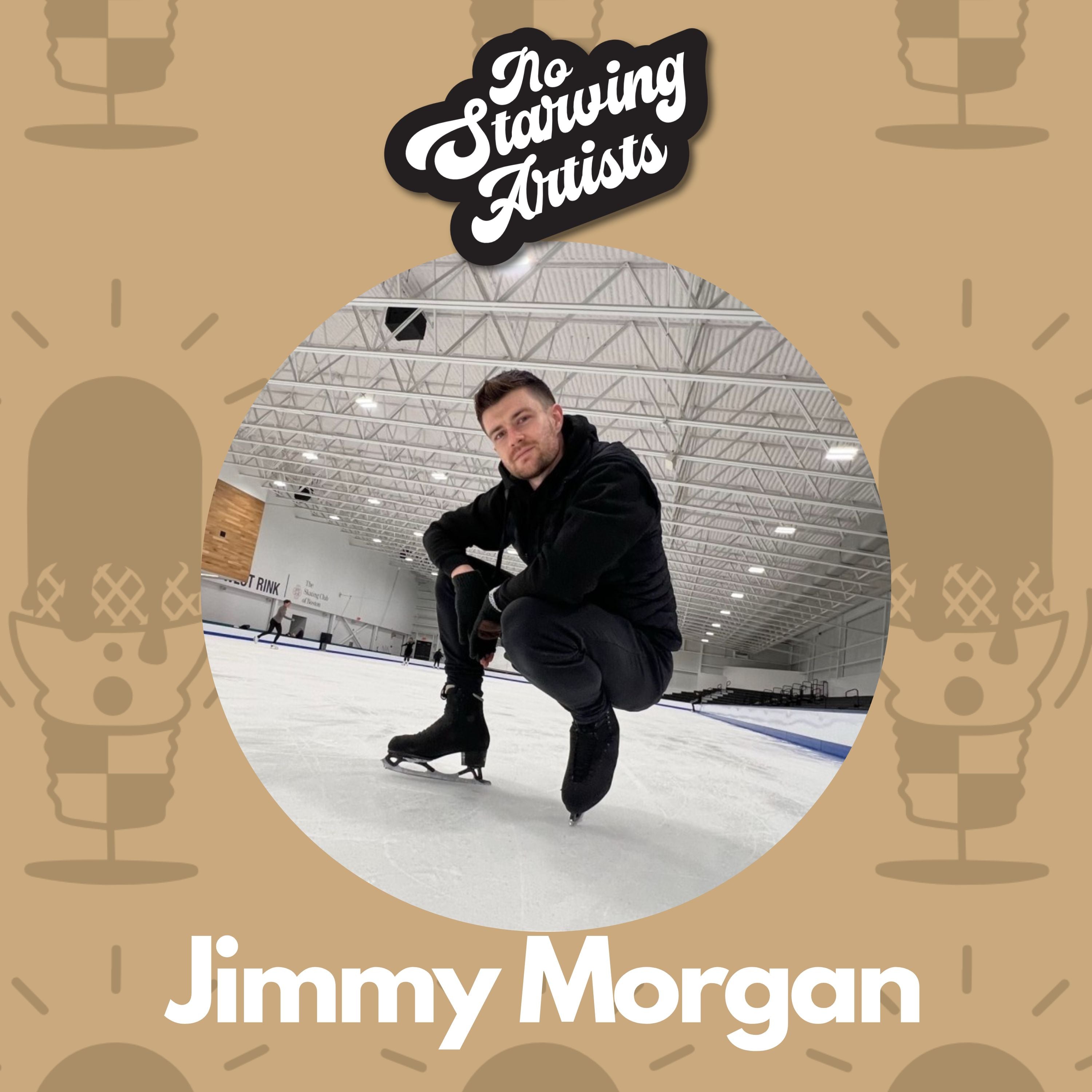
In this episode of the No Starving Artist Podcast, we sat down with Jimmy, a figure skating coach and choreographer, to explore the crossover between dance and figure skating, the pressure of technical performance, judging systems, youth culture in competitive arts, and what “artistry” really means inside rigid competitive structures.
If you work in dance, choreography, or competitive performance, this conversation will hit home.
From Hockey to the National Stage: Jimmy’s Journey
Jimmy began his journey in hockey before discovering figure skating through Disney on Ice. While he competed at a high level in pair skating and even made the national team, he realized that technical tricks never lit him up the way choreography and expression did.
That realization led him into coaching and choreography—where he now helps skaters build artistry, emotional connection, and performance skills alongside their technical training.
Key takeaway:
Technical excellence doesn’t equal artistic fulfillment—and finding your lane inside a competitive system matters.
The Problem with “Perfect” Judging
Figure skating uses a highly standardized judging system designed to reduce bias—but that standardization can flatten creativity.
Jimmy shared how choreography is often shaped not by authentic storytelling, but by what judges are most likely to reward. This creates pressure for skaters to:
-
Prioritize speed over intention
-
Perform constant movement instead of meaningful stillness
-
Avoid creative risks that judges might not “get”
Sound familiar?
Dancers face the same pressure when choreography becomes about points instead of presence.
Big idea:
Judges don’t need to like a piece—they need to understand what the artist is going for and evaluate how effectively it’s communicated.
Youth Culture & The “Too Young / Too Old” Trap
In both dance and figure skating, the system rewards youth:
-
Younger athletes are easier to mold
-
Younger performers chase approval
-
Coaches often benefit from attaching their names to young talent
But this creates a harmful cycle where athletes peak early, burn out fast, and feel disposable as adults.
Jimmy shared that he’s a better mover now in his 30s than he ever was as a competitor—and that maturity, curiosity, and life experience make performers deeper artists.
Truth bomb:
The system is optimized for producing champions—not whole humans.
Trick Culture & The Endless Chase for “More”
In skating, the higher the rotation, the more points you get.
In dance, the bigger the trick, the louder the applause.
Both worlds suffer from the same issue:
There’s always another level to chase—and it’s never enough.
This mindset trains performers to:
-
Measure themselves by what they can’t do
-
Tie worth to constant progression
-
Ignore what makes them unique
Reframe:
What if we built systems that rewarded what makes each performer distinct instead of interchangeable?
Coaching & Choreography: The Long Game
Jimmy approaches choreography as a teaching tool, not a finished product.
Instead of changing choreography when something doesn’t “work” immediately, he lets it evolve across the season so skaters can grow into the movement.
This teaches:
-
Patience
-
Skill development through discomfort
-
Confidence through progress
It also challenges the idea that performance should look “perfect” right away.
Parent Dynamics in Competitive Arts
Just like dance, figure skating has intense parent involvement.
Sometimes that support is healthy.
Sometimes it becomes controlling.
The biggest issues show up when:
-
Parents and coaches don’t share values
-
Communication breaks down
-
Parents step into coaching roles without the training
The solution?
Clear expectations, transparency, and values alignment from the start.
Is Blades of Glory Actually Accurate?
Surprisingly… yes.
The rivalries, theatrics, politics, and egos? Real.
The dramatization? Exaggerated—but rooted in truth.
Figure skating has always lived somewhere between elite sport and theatrical performance—which is exactly why it’s so easy to parody.
Social Media’s Impact on Figure Skating
Unlike tradition-bound competition spaces, social media has opened creative doors for skaters:
-
Freestyle skating
-
Partner work outside competition rules
-
Dance-influenced movement on ice
-
Performance-based skating content
Skaters are now building identities beyond competition—and using platforms like TikTok and Instagram to showcase artistry that would never score points in competition.
Parallel to dance:
Social media is reshaping what “success” looks like in aesthetic sports.
What Dance & Figure Skating Can Learn from Each Other
Dancers envy skaters’ ability to stay moving while still.
Skaters envy dancers’ freedom to perform anywhere.
Both worlds are rooted in aesthetic performance.
Both struggle with:
-
Rigid judging systems
-
Burnout
-
Trick culture
-
Identity suppression
There’s massive potential for collaboration, crossover training, and shared advocacy for healthier creative ecosystems.
Final Thoughts
This conversation wasn’t about skating vs. dance—it was about systems vs. humanity.
When competition prioritizes points over people, performers lose connection to why they started in the first place.
Artistry, expression, and individuality don’t weaken competitive spaces—they save them.
Connect with Jimmy
You can find Jimmy on Instagram and TikTok at:
@hashtagjimmy (spelled out — no symbol)
If you’re curious about artistry in figure skating, creative coaching, or performance psychology, he’s a must-follow.
Share:
From Hunger to Purpose: Work Ethic, and Building the Next Generation of Dancers - Episode 52
Is Ballet dying? - A conversation with Shane Wuerthner