
Finding Your Voice in Dance: Confidence, Industry Realities, and Protecting Your Passion
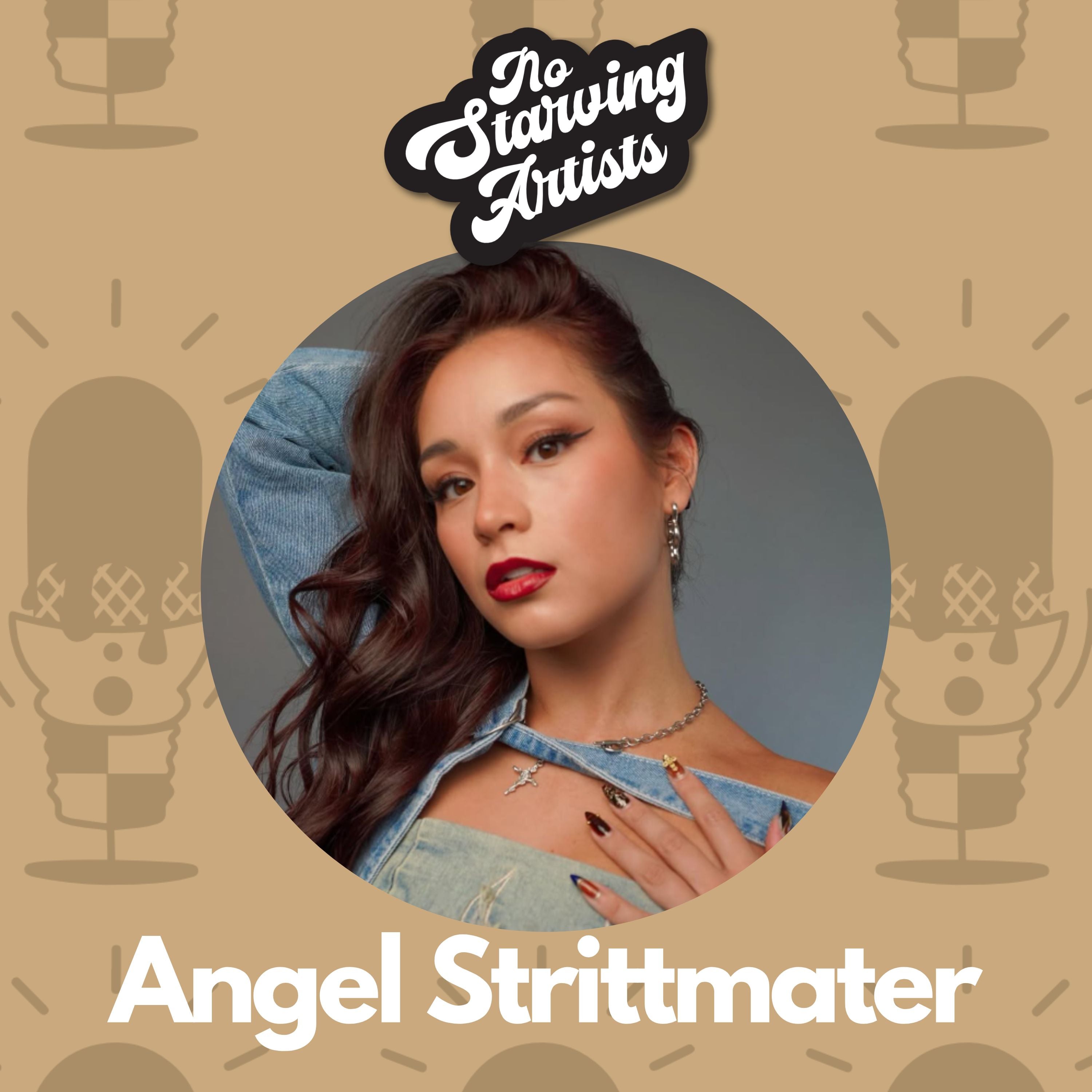
Angel Strittmatter
The dance world often celebrates highlight reels — the wins, the jobs, the viral moments. But behind every artist is a much deeper story about growth, identity, mental health, and learning how to navigate an industry that can be both inspiring and overwhelming.
In this episode of the No Starving Artist Podcast, Jason sits down with dancer, choreographer, and movement director Angel Strittmatter to talk about her journey from Minnesota to Los Angeles, building a career in commercial dance, navigating social media, and speaking openly about the realities many dancers face but few talk about publicly.
From mental health struggles to industry culture shifts, this conversation is an honest look at what it really takes to build a sustainable life in dance.
From Minnesota Studios to Los Angeles
Angel’s dance story began like many — growing up in a competitive studio environment, training in contemporary, jazz, and ballet. But unlike many dancers who always knew they wanted to pursue dance professionally, Angel initially planned to follow a more traditional path.
She attended the University of Minnesota with plans to go into nursing, influenced by a school culture heavily geared toward traditional careers like healthcare and business. But once she was immersed in college life, she realized she couldn’t ignore her passion for dance.
That realization led her to finish her degree with a Bachelor of Arts in Dance before eventually making the move to Los Angeles after COVID.
Like many dancers who relocate, the transition wasn’t just geographic — it was cultural, stylistic, and emotional.
Moving from a concert dance environment to a commercial industry hub meant starting over in many ways, especially when it came to training in hip-hop and street styles.
“It’s humbling to go from feeling like you’re at the top of your environment to realizing you’re the worst one in class,” she shared.
But that humility became fuel for growth.
Discovering Social Media During a Difficult Time
Angel’s journey into content creation didn’t start as a career move — it began during one of the most emotionally challenging periods of her life.
While helping care for her grandmother in hospice, she turned to creating videos as a way to cope and find moments of lightness during a heavy time.
What started as a creative outlet quickly gained traction, and she realized people connected with her humor and honesty.
Today, she’s known for candid dance commentary and comedy that explores everything from industry culture to personal experiences — often tackling topics others avoid.
Speaking Honestly in an Industry That Often Doesn’t
One of the most striking things about Angel is her willingness to talk openly about complex topics.
She credits her college dance education, which emphasized social justice and critical analysis of the dance industry, for helping her develop the confidence to share her perspective.
Rather than seeing her honesty as controversial, she sees it as necessary — especially when it comes to conversations around dancer wellbeing, boundaries, and industry culture.
Her philosophy is simple: if something feels important to talk about, it probably is.
The Reality of Moving to Los Angeles
For many dancers, moving to LA is both a dream and a shock — and Angel experienced both.
Stylistically, she had to expand her training. Socially, she had to navigate a completely new environment. Emotionally, she faced moments of doubt, including waking up her first day in her apartment and wondering if she had made a mistake.
But she made a promise to herself to stay at least one year before making any decisions, giving herself time to gather enough experience to truly evaluate whether the path was right for her.
That commitment helped her push through the uncertainty and continue building her career.
Mental Health, Anxiety, and Learning to Ask for Help
Angel spoke candidly about struggling with anxiety and mental health challenges during college and early in her career.
The pressure to perform, combined with perfectionism and constant self-critique, led to burnout and panic responses — experiences many dancers can relate to but rarely discuss openly.
Eventually, she realized she needed support and began prioritizing therapy and mental health care.
The impact was transformative.
She noticed her dancing improved dramatically once she started taking care of herself emotionally, reinforcing an important lesson: caring for your mental health isn’t separate from your craft — it’s foundational to it.
Navigating Social Media: The Good and the Challenging
While social media has opened doors, it also comes with challenges.
Angel has experienced both encouragement from respected artists and negative comments from strangers who misunderstand her humor or perspective.
Over time, she’s learned to set boundaries — including limiting how much she reads comments — to protect her mental space.
She also approaches posting with intention, especially when discussing sensitive topics, balancing honesty with responsibility.
Values, Boundaries, and Choosing Who You Work With
A major theme in the conversation was the importance of values.
Angel believes being vocal about her beliefs helps ensure she works with people who share similar perspectives, particularly when it comes to respect, professionalism, and safety.
Rather than seeing strong opinions as a risk, she sees them as a filter that helps align her career with environments where she can thrive.
Concerns About Dance Culture and Education
Angel also shared thoughtful insights about trends she’s seeing in dance education, particularly around burnout, boundaries, and autonomy.
She expressed concern about young dancers training for extremely long hours, pushing through injuries, and learning to ignore their own needs — patterns that can carry into professional environments.
Her perspective highlights the importance of teaching dancers to listen to their bodies, advocate for themselves, and maintain a healthy relationship with their craft.
Dance, she emphasized, should remain expressive, social, and joyful — not purely transactional.
Advice for Dancers: Know Yourself
When asked what dancers can do to move forward in their training, Angel emphasized self-awareness.
Understanding how you learn best — whether through repetition, listening to music, or visual cues — can dramatically improve progress.
She also encouraged dancers to evaluate their goals realistically and recognize that there are many paths within dance.
Not thriving in one environment doesn’t mean you’re not talented — it may simply mean you belong in a different space.
Final Thoughts
Angel’s story is a powerful reminder that success in dance isn’t just about talent or opportunity — it’s about resilience, self-awareness, and having the courage to be honest about your experiences.
By sharing openly about mental health, industry culture, and personal growth, she’s helping create space for more transparent conversations within the dance community.
And ultimately, that honesty may be one of the most valuable contributions an artist can make.
Connect with Angel
You can follow Angel on Instagram and TikTok:
@angelstritt
Share:
Emotional Adultification, Dance Education & Who We’re Really Training - Episode 50
From Hunger to Purpose: Work Ethic, and Building the Next Generation of Dancers - Episode 52